Business Past of Batumi

The geographical and strategic positioning of Georgia has been crucial for its industrial and economic development. Throughout various historical periods, geopolitical, trade, transport, and industrial interests that evolved around the Caucasus region added a specific economic value and allure to Georgia. Since the latter half of the 19th century, Batumi has been growing into such a valued center, particularly after being declared a Porto Franco in 1878. These processes were driven by the industrial requirements of the industrial age, in which oil played a significant role.
After 1878, Batumi and oil became closely linked. Batumi had the second deepest (maximum depth of 58 m) and convenient oil depot on the Black Sea, after Sevastopol. By 1883, Batumi was connected to the Transcaucasian railway network; its harbor was reconstructed, and the Baku-Batumi oil pipeline was established (1896-1906). Consequently, Batumi evolved into an international port.
Even today, the Batumi terminal is the largest oil export gateway on the Black Sea, and the city remains a critical export point for crude oil and refined petroleum products from the rapidly expanding fields of the Caspian Sea region.
The importance of Batumi was well recognized by world-renowned businessmen of the time, whose names have become an integral part of Batumi's business history. Notably, the Nobel brothers and the Rothschild family are worth mentioning in this context.
The "Nobel Brothers Oil Production Company", or "Branobel", was established in 1879. At that time, it was the most significant oil company. The extraction and processing of oil in Baku led to the need for building their transport network: oil pipelines, tankers, tank cars, and oil bases, complete with access and railway lines. Upon the company's establishment, it included assets acquired by the Nobel brothers in 1870. Some of the company's facilities, as well as oil reservoirs, are still in use today.
The story of Batumi and the Nobels began when Ludwig Nobel received a large order to produce weapons from the Russian imperial government. Ludwig sent his brother Robert to the Caucasus to source material for the rifle buttstock. During this trip, Robert Nobel observed primitive oil extraction and refining equipment in Baku and decided to purchase it. Soon, with the support of Grand Duke Michael (Emperor Alexander's brother), the Nobels began active operations. The Nobels are credited with the concept and implementation of the first oil tanker as well as the barrel concept, which later became a unit of measurement. Initially, oil from Baku was transported by ship to Astrakhan, then by the Volga River to the northern railway junction. This process made the products more expensive. Furthermore, wood was scarce for barrel production, leading the Nobels to import it from the USA, which increased the cost even more. Consequently, American kerosene was cheaper in Tbilisi than in Baku.
With the support of Count Witte, the financing for the construction of a railway artery in the Caucasus by the renowned businessman Alphonse Rothschild was resolved. The construction of the Baku-Batumi railway began in 1883 and was completed in 1886. The Rothschild brothers established the Caspian and Black Sea Oil Company and built oil refining and storage reservoirs in Batumi concurrently with the Nobels. The Nobels continued to use the northern route (Astrakhan) for oil transportation until the 940 km-long Baku-Batumi oil pipeline was built. As a result, the scale of oil production increased.
The pipeline project wasn't completed until 1906. It was the world's longest pipeline (200 mm in diameter, capacity – 3 million tonnes per year, with 16 compressor stations). The introduction of pipelines and railways led to an increase in the Russian Empire's share of oil exports (curbing U.S. oil exports), but Ludwig Nobel did not live to see this success.
The Rothschilds had their sights set on East Asia, where, until that time, only Rockefeller's "Standard Oil" was operating. Rothschild approached London entrepreneur Marsuk Samuel, who ordered several tankers. These tankers were to transport oil from Baku to Bangkok via the Suez Canal. This route was shorter than the one Standard Oil used to export its oil around the Cape of Good Hope in Africa.
The growing significance of Batumi for the export of oil from Baku contributed to the city's development. Batumi attracted representatives from various nations and ethnicities, which was promoted by declaring the city a "Porto-Franco."
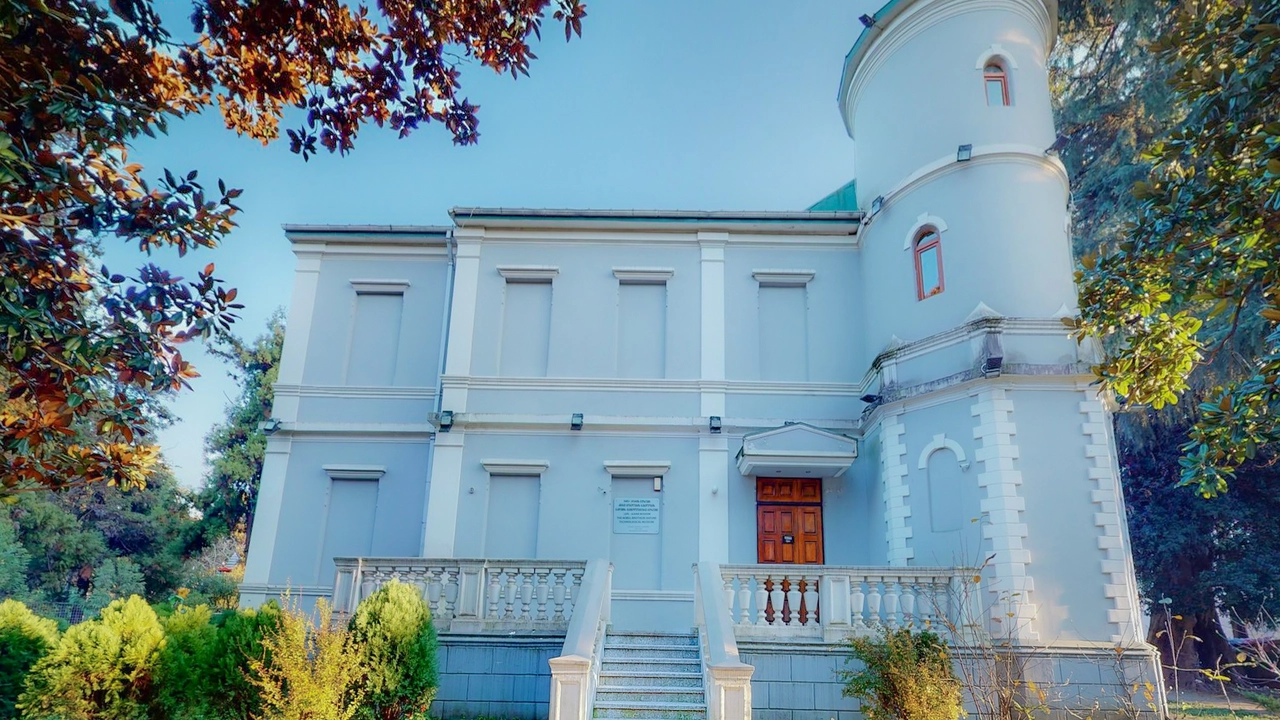
Big firms like the Nobels and Mantashev had monopolistic aspirations. These trends became evident in Batumi, where, at the corner of Dondukov-Korsakov (now K. Gamsakhurdia) and Boulevard (now Ninoshvili) streets, within the first police station's quarter #2, a 415 square Sazhen land area was allocated for the Nobel brothers' oil industry partnership office. A single-story house built on a stone foundation and a stone wing with a kitchen, pantry, and outbuildings was situated on the given plot of land. The Nobel brothers' oil industry's cantor project was to be reviewed by the construction department of the Kutaisi governorate.
The monopolistic tendencies of the large industrialists had a significant negative impact on small entrepreneurs. Hence, there was a demand for the enactment of an anti-monopoly law. N. Nikoladze was in clear opposition to Nobel. At a meeting of the "Russian Imperial Society" (October 15, 1882), N. Nikoladze publicly declared that Nobel did not fund small entrepreneurs and even published an article to this effect, highlighting the deleterious aspects of the monopoly and viewing it as unfair that consumers received all energy resources from Nobel.
Such speeches couldn't halt the process of production concentration. Instead, the Nobel production started to expand. To this end, the Nobels decided to construct an oil refinery and install reservoirs in Batumi. Based on documents preserved in the Adjara Archive Division, the Nobel Company began to search for available space in Batumi for the construction of the factory and the placement of reservoirs.
The Nobels weren't the only ones interested in Batumi. In the second half of the 19th century, Baku's oil attracted the attention of such a powerful family dynasty as the Rothschilds, which naturally led to their business interests in Batumi as well.
This interest was largely fuelled by the Rothschilds' competition with the second Jewish financial dynasty, the Rockefellers, who were established in the United States of America. The rich industries of Baku would have given the Rothschilds a significant advantage, but owning these industries was not enough. The Rothschilds needed a cost-effective and convenient way to export oil to Europe, a critical market for petroleum products. The port of Batumi, with its characteristics, fully met such requirements, but it was under the domain of the Ottoman Empire. Industrial interests necessitated that Batumi be transferred to Russia. Thus, Batumi-Baku would become the property of a single country, in this case, Russia, and oil exports from Baku to Europe through Batumi would proceed without hindrances and unnecessary costs.
The Russo-Turkish War of 1877-1878 contributed to the realization of this idea, which ended with the Treaty of San Stefano and the declaration of Batumi as "Porto Franco."
Having achieved their goal, the Paris banking house of the Rothschilds became actively involved in the Baku oil industry. As a result of investing millions of dollars, completing the Baku-Batumi railway line, establishing their commercial-industrial community, and transforming Batumi into a support point, they secured a strong foothold in this field.
This is how Batumi transformed into an important port-industrial city, thereby reclaiming its significance as one of the most vital junctions of the ancient Silk Road trade route, and to this day, it maintains its utmost importance in the country's economy.